How to Spend 1 Week In Vienna Austria 2025

Planning a week in Vienna? This thorough and easy-to-follow 7-day itinerary has everything you need for the perfect stay.

I absolutely adore Vienna—there’s something magical about the way art, music, and imperial charm come together here. The grand architecture, elegant streets, and deep cultural roots make it stand apart from other European capitals. While even a single day in Vienna can leave a lasting impression, spending a full week here truly lets you soak it all in. If you have the chance to explore Vienna for seven days, don’t hesitate—take it. This city has a timeless beauty and rhythm that’s impossible to forget.

To give you a quick visual overview before diving into the details, here’s a handy infographic that maps out your week in Vienna.
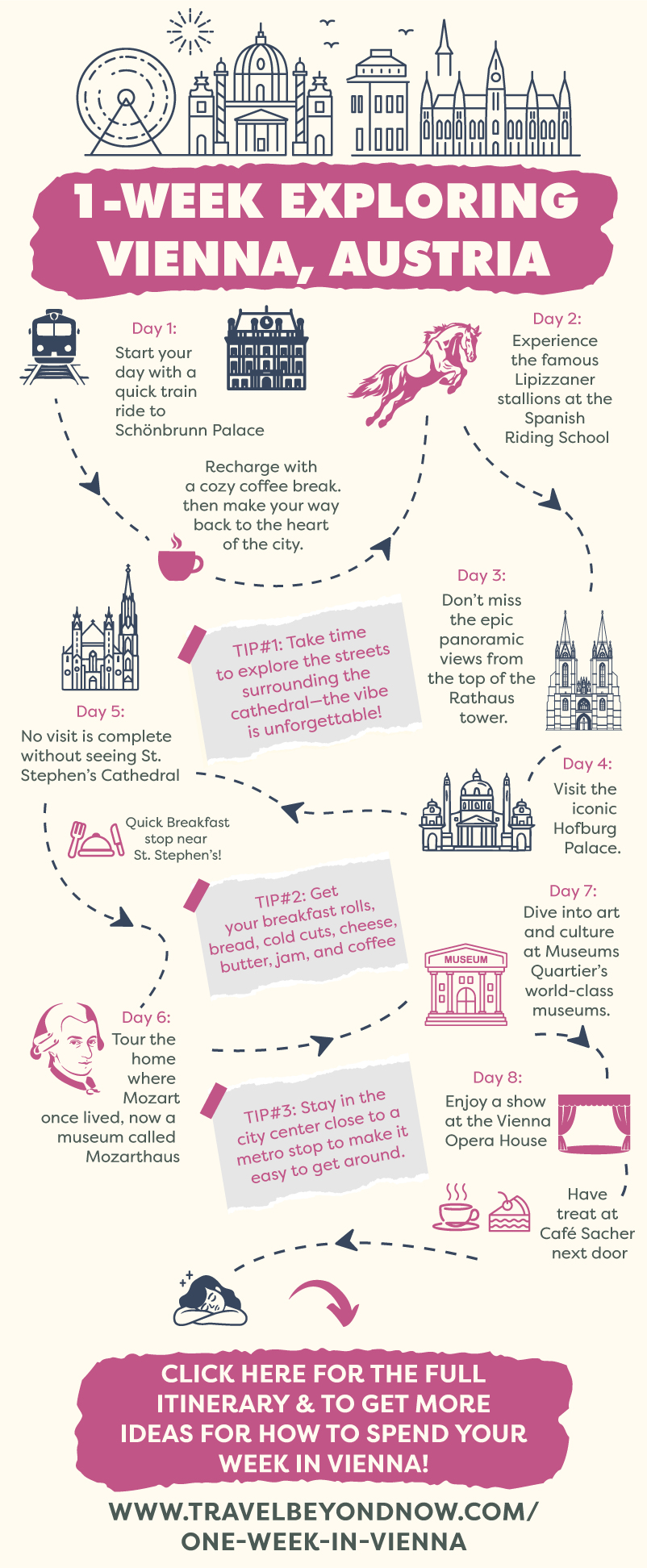
how to spend 1-week-in-Vienna-austria-travel

When’s the Best Time to Visit Vienna?

It all depends on what you’re most excited to see! If catching a world-class opera performance at the iconic Vienna State Opera is at the top of your list, try to avoid visiting in July or August. That’s when the opera house takes its summer break and the performers are off on holiday.

Similarly, if you’re dreaming of watching the majestic Lipizzaner horses at the Spanish Riding School, it’s worth knowing they take a summer break too. During July and August, the fully trained stallions are away enjoying their downtime in the countryside. While you can still catch some performances featuring younger horses and adorable foals, it won’t be the full experience.

So for the best of Vienna’s classical charm, plan your trip outside those summer months—spring and fall are especially lovely!

One Week in Vienna: Itinerary at a Glance

Spending a full week in Vienna means you don’t have to rush—and that’s the best way to enjoy this graceful city. Here’s a quick look at how you can spread out the must-see sights across your stay. I’ll dive into each day’s details later in the guide.

Time Needed: 7 days

One Week in Vienna: Highlights Itinerary

  • Schönbrunn Palace
    Wander the grand halls and beautiful gardens of this iconic former imperial residence—an ideal start to your week.
  • Spanish Riding School
    Watch the elegant Lipizzaner stallions perform at the world-famous school. It’s a uniquely Viennese experience.
  • Rathaus (City Hall)
    Admire the Gothic architecture and learn about Austria’s government with a guided tour (or just soak in the view from outside).
  • Hofburg Palace
    Step into imperial Vienna in the very heart of the city, with museums, royal apartments, and history around every corner.
  • St. Stephen’s Cathedral
    Marvel at the soaring towers and ornate interior of this historic cathedral right in Vienna’s city center.
  • Mozart House
    Visit the actual home where Mozart lived and composed, and get an intimate look at his life and genius.
  • MuseumsQuartier
    Explore this vibrant cultural district. Whether you’re into modern art, classical pieces, or quirky exhibitions—there’s something for everyone.
  • Vienna State Opera
    Enjoy a performance or simply take a tour of one of the most famous opera houses in the world.

More to Explore in Vienna

This guide also includes where to eat (including gardens and top local spots), a primer on Vienna’s beloved café culture, hotel suggestions, helpful packing tips, and practical info to make getting around the city a breeze.

Ready to plan your perfect week in Vienna? Let’s dive in.

One Week in Vienna Recommended Itinerary

To make the most of your seven days in Vienna—especially if it’s your first time visiting—I’ve put together a carefully planned itinerary that balances iconic sights, cultural gems, and a few local surprises. This itinerary gives you enough time to fully explore Vienna’s charm without feeling rushed.

Each day focuses on a different part of the city or a specific theme, so you’ll experience the diversity Vienna has to offer—from imperial palaces and classical music to coffeehouse culture and outdoor escapes.

If you have special interests—like traveling with kids, diving into Vienna’s political history, or seeking out green spaces—don’t worry. I’ve also included personalized itinerary modifications and bonus suggestions throughout this guide to help you tailor your trip just the way you want it.

Day 1: Start with Imperial Grandeur at Schönbrunn Palace
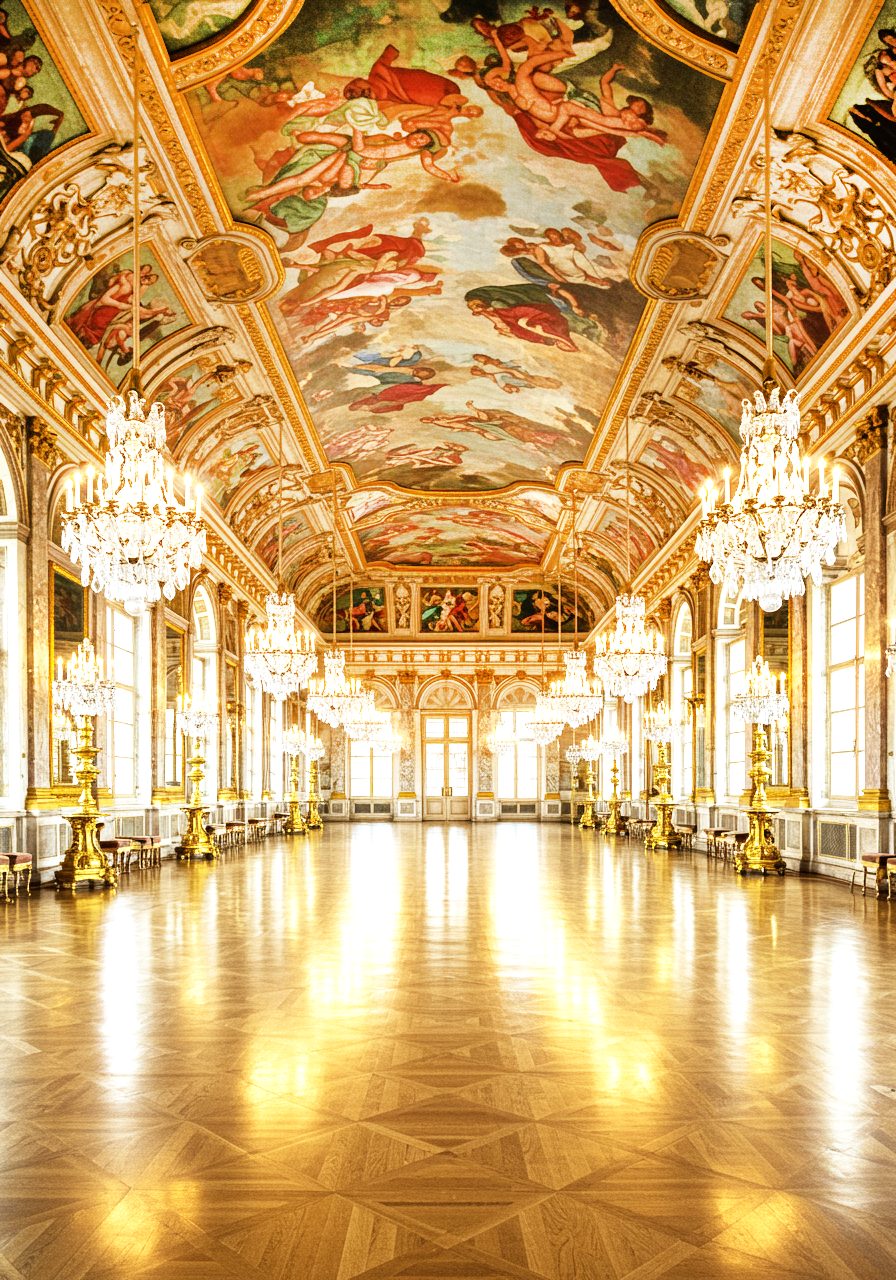
Schönbrunn-Palace-Austria

Even though Schönbrunn Palace sits slightly outside the city center, it’s well worth the journey—and easily one of Vienna’s most iconic landmarks. This magnificent baroque palace was once the Habsburgs’ summer residence and offers a fascinating window into royal life.

Originally built as a hunting lodge after the former structure was destroyed in 1683, the site truly flourished under Empress Maria Theresa. She transformed the modest retreat into the grand Schönbrunn Palace you see today and spent countless summers here, accompanied by hundreds of staff. That grandeur and scale are still on full display in both the interiors and the expansive grounds.

What You’ll See Inside the Palace

The palace interiors have a warm, elegant tone—thanks in part to the walnut paneling and rich reds and browns preferred by Maria Theresa. As you walk through the opulent rooms, keep an eye out for these highlights:

  • Emperor Franz Josef’s Bedchamber: This is where the long-reigning emperor spent his final moments. A somber painting of his deathbed hangs on the wall, alongside original personal items like his grooming tools.

  • His Private Lavatory: Surprisingly simple, this room reflects Franz Josef’s famously modest lifestyle.

  • Sisi’s Dressing Room: Get a glimpse of Empress Elisabeth’s (nicknamed “Sisi”) famous floor-length hair, displayed on a mannequin. Her daily hair routine took hours!

  • The Emperor and Empress’s Bedroom: Bathed in soft blues and greens, this room feels both regal and calm.

  • The Family Dining Room: Franz Josef enjoyed his meals here—often traditional dishes like Wiener Schnitzel. Sisi, ever conscious of her figure, seldom joined.

  • The Children’s Room: You’ll see portraits of Maria Theresa’s 11 daughters. Only one, Maria Christine—her favorite—was allowed to marry for love.

  • The Mirror Room: A small but storied space, where a six-year-old Mozart once performed in 1762.

  • The Great Gallery: Fit for lavish balls and royal banquets, this rococo-style hall dazzles with gilded mirrors and ceiling frescoes celebrating Maria Theresa’s reign.

  • Chinese Cabinets: These cozy salons were used for games and secret meetings, adorned with intricate Asian-inspired décor Maria Theresa adored.

  • The Carousel Room: Its focal point is a painting of the Empress herself on horseback during a celebratory carousel after the recapture of Prague.

Don’t Miss the Schönbrunn Grounds

What makes Schönbrunn even more special is what lies outside the palace walls. The sprawling gardens are free to wander and filled with little surprises around every bend.

  • The Garden Maze: Actually a set of three mazes, these are fun if you’re traveling with kids. The area opens up into a play zone at the end.
    Travel Tip: If you’re not into mazes or short on time, you can skip this one and save your energy for more scenic experiences.

  • Walking Paths to the Gloriette: You’ll find both wooded trails and more formal garden routes leading up to the Gloriette, a hilltop colonnade offering one of the best panoramic views of Vienna. It’s a bit of a hike, but worth it!

  • Café Gloriette: Once at the top, reward yourself with a local treat. Try a Schokochino—a rich, chocolate-infused coffee drink topped with whipped cream. It’s not too sweet, but deeply comforting after the uphill stroll.

Schönbrunn is the perfect introduction to Vienna. It offers not just a taste of royal history but also beautiful outdoor space, iconic architecture, and even a touch of Mozart. It’s an ideal way to ease into your week in Vienna with a little bit of everything the city does best.

Day 2: Grace in Motion – The Spanish Riding School
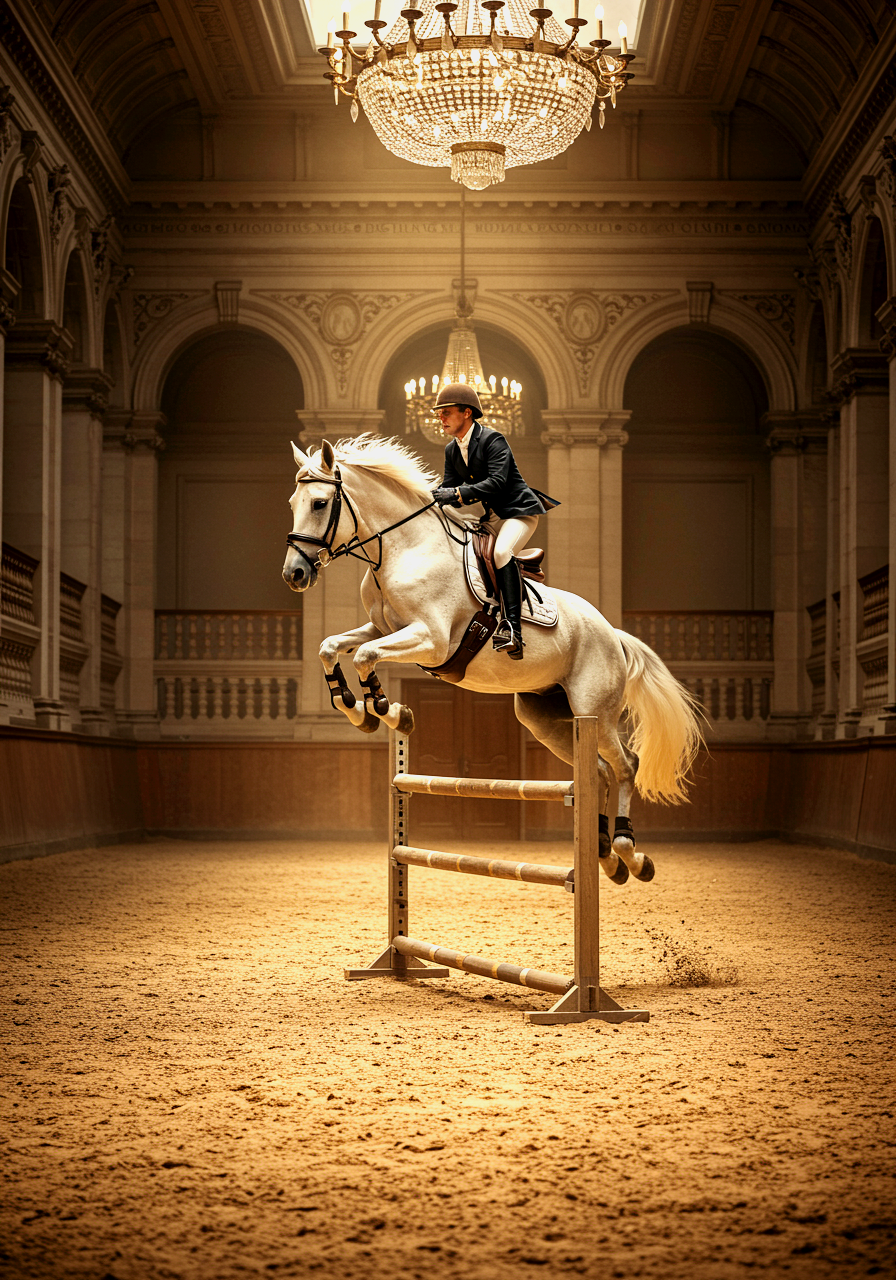
Spanish-Riding-School

A visit to Vienna wouldn’t be complete without witnessing the elegance and discipline of the world-famous Spanish Riding School, home of the stunning Lipizzaner stallions. Nestled in the heart of the city at the Hofburg complex, this institution has preserved the centuries-old art of classical dressage, where horse and rider move as one in a captivating display of precision and grace.

Founded over 450 years ago, the Spanish Riding School is more than just a tourist attraction—it’s a living tradition. The star performers here are the Lipizzaner horses, a noble breed specially trained for refined maneuvers that look almost like dancing. Watching them glide, leap, and turn in sync with their riders is like watching poetry come to life.

Behind the Performance: What Makes a Lipizzaner Special

What you’ll see during a visit—whether you opt for a full performance, a guided tour, or morning training—is the result of years of dedication. Each horse is selected based on lineage and temperament. Breeding starts in the countryside, where strong broodmares pass on their lineage to foals with the right mix of grace and grit.

From just a few months old, these foals begin learning the foundations of classical training. By the age of one, young stallions are separated from their mothers and spend time in the Austrian Alps, developing strength and character in nature’s classroom. When they return to Vienna, their intensive schooling begins in earnest—culminating in performances that are both athletic and artistic.

The Carriage Legacy

In addition to their stunning solo performances, Lipizzaners have historically been prized for carriage driving. In fact, a four-horse team is the gold standard, with two horses out front (the leaders) and two behind (the power pullers). The training for this is as meticulous as any ballet, and the Spanish Riding School offers a glimpse into this tradition as well.

The beauty of these horses is matched by their bond with the riders. The riders themselves train for years, mastering the art of silent communication through balance and subtle movements. The result? Performances so fluid they feel like a slow-motion dream.

Planning Your Visit

If you want to catch the full experience, book tickets well in advance for one of the public performances, which take place in the majestic Winter Riding Hall—a chandelier-lit arena that feels like a scene from another century. Alternatively, you can attend a morning exercise session with classical music or take a behind-the-scenes tour that includes the stables and tack rooms.

One Week Tip: Since this is a highlight attraction, reserve this for your second day in Vienna, after exploring Schönbrunn. If visiting during summer (especially July and August), be aware that the main stallions are usually away on their own “vacation” in the countryside. In their place, younger horses often train or perform—still fascinating, but slightly different than the full Lipizzaner showcase.

A visit to the Spanish Riding School is not just a treat for horse lovers—it’s a cultural experience steeped in Austrian tradition. It blends discipline, heritage, and elegance into one unforgettable performance. Be ready to be amazed.

Day 3: Grand Architecture & Civic Pride – Vienna’s Rathaus
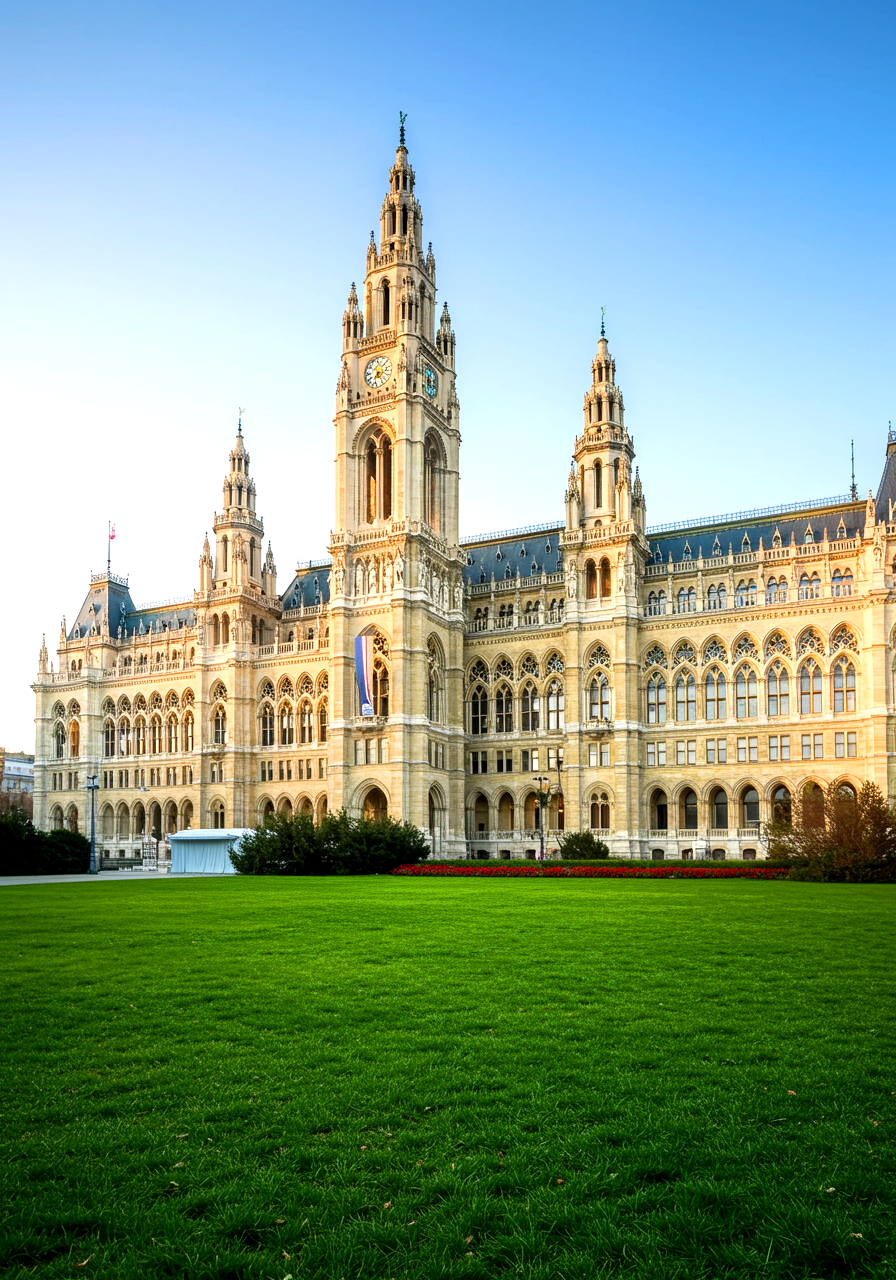
Vienna’s-Rathaus

By midweek, it’s the perfect time to dive into Vienna’s civic heart with a visit to the Rathaus, the city’s majestic Town Hall. Far from just a government building, this architectural gem stands tall as one of Vienna’s most iconic landmarks—and it’s especially known for its fairy tale-like façade.

Completed in 1883, the Rathaus is a classic example of Historicism, an architectural style that draws inspiration from the past to create something entirely new. Its soaring spires and detailed ornamentation feel like something straight out of the Gothic era—yet it’s uniquely Viennese in character.

The building serves as the seat of the mayor and the city council, but what makes it really stand out is its ornate tower, capped by the Rathausmann, a statue of an armored knight that proudly overlooks the city. Locals often joke that he’s Vienna’s unofficial guardian.

Why You Should Visit

Even if you’re not usually into government buildings, the Rathaus is worth seeing for the architecture alone. The wide-open square in front of it—Rathausplatz—is also a hotspot for local events. Depending on the season, you might stumble upon a charming Christmas market, a bustling film festival, or a sunny outdoor concert.

Inside, you can take a guided tour (usually available in German and English), which gives you a behind-the-scenes look at the richly decorated interior halls and rooms where political decisions get made—and where grand balls and galas are held.

A Quick Climb – Optional, But Worth It for the View

Feeling adventurous? You can climb the Rathaus Tower—a spiral staircase with 331 steps leads you to a lookout point with beautiful views over Vienna’s rooftops. It’s definitely a bit of a workout, but if panoramic cityscapes are your thing, it’s a rewarding experience.

One Week Tip: If your legs are still recovering from the Schönbrunn Gloriette hike or you’re trying to conserve energy for a museum-packed afternoon, feel free to admire the Rathaus from the square below. It’s just as photogenic from the outside—especially when lit up at night.

Elegant, dramatic, and historically significant, the Rathaus offers a lovely mix of culture and local pride. Even if you don’t step inside, standing in front of it will make you feel like you’re part of Vienna’s ongoing story.
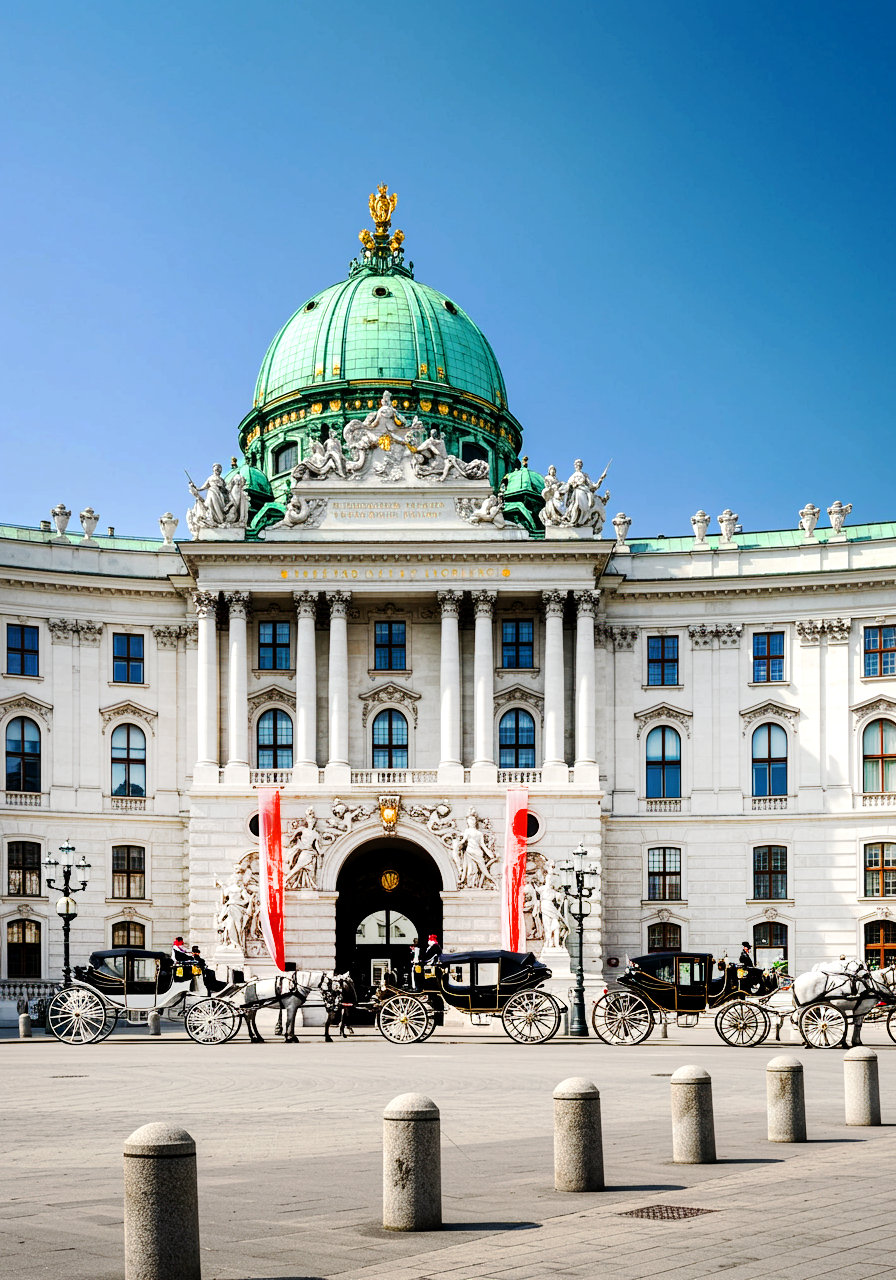
Day 4: Imperial Majesty and Hidden Stories – Hofburg Palace

Hofburg-Palace

After soaking up the charm of Vienna’s civic and cultural heart, Day 4 is perfect for stepping into the world of emperors, empresses, and centuries of royal intrigue with a visit to Hofburg Palace—a sprawling complex that feels more like a small city than a single palace.

Known as the Imperial Palace, the Hofburg has been the seat of power in Vienna for over 700 years. From the mighty Habsburg dynasty to today’s Austrian President, it has continuously evolved from imperial residence to modern-day political hub.

What makes it particularly special is its layers of history. Different sections of the complex showcase Baroque, Gothic, Renaissance, and Neoclassical architecture, revealing how the palace has grown and transformed with the times. Even if you just wander its vast courtyards and admire the contrasting styles, you’ll feel the deep pulse of Austria’s royal past.

A Living Palace with Political Roots

While it once served as the seat of the Holy Roman Empire, today Hofburg remains active in Austrian politics—housing the offices of the President of Austria, various state ministries, and even hosting state receptions. So yes, this is a palace that’s very much still in use!

But even more fascinating are the imperial treasures you can explore inside.

What to See Inside Hofburg Palace

The Sisi Museum

If you’re intrigued by Austria’s most iconic royal figure, don’t miss the Sisi Museum. Empress Elisabeth, affectionately known as Sisi, remains one of Europe’s most fascinating historical figures—a symbol of beauty, rebellion, and tragedy.

Inside the museum, you’ll uncover her story from carefree Bavarian duchess to reluctant Empress of Austria. Sisi was known for her striking looks, floor-length hair, love of poetry, and resistance to the strict rules of court life. She was also a dedicated traveler and horse rider, preferring motion to monarchy.

You’ll see personal belongings, her original gowns, and even her exercise equipment—yes, she was well ahead of her time in fitness! The museum also explores her deeply personal struggles and the tragic circumstances of her assassination in 1898.

One Week Tip: The Sisi Museum can be a highlight even if you’re not into royalty—it’s a moving look at a woman caught between duty and freedom.

The Imperial Apartments

Adjacent to the Sisi Museum are the Imperial Apartments, which give you a vivid snapshot of daily life during the Habsburg era. These rooms were once the winter residence of Emperor Franz Joseph and Empress Elisabeth, and they’re stunningly preserved in all their 19th-century glory.

You’ll wander through:

  • Lavishly decorated bedrooms

  • Elegant sitting and dining rooms

  • Sisi’s dressing and exercise room

  • The Emperor’s modest working space (Franz Joseph famously worked long hours)

Each room tells a story—of personal routine, political power, and the quiet rituals of an empire that once ruled much of Europe.

One Week Tip: If you’re short on time or already did Schönbrunn Palace in depth, you can explore just the Sisi Museum and Imperial Apartments in about 90 minutes. But if you love imperial history, allocate 2–2.5 hours and consider getting a combined ticket that includes the Silver Collection or Treasury, too.

Whether you come for the architecture, the royal tales, or just to feel the energy of a place that has shaped Austrian history for centuries, Hofburg Palace is one of Vienna’s absolute must-sees. It’s more than a museum—it’s an experience that brings Vienna’s imperial soul to life.

Day 5: Towering Faith and Timeless Beauty – St. Stephen’s Cathedral

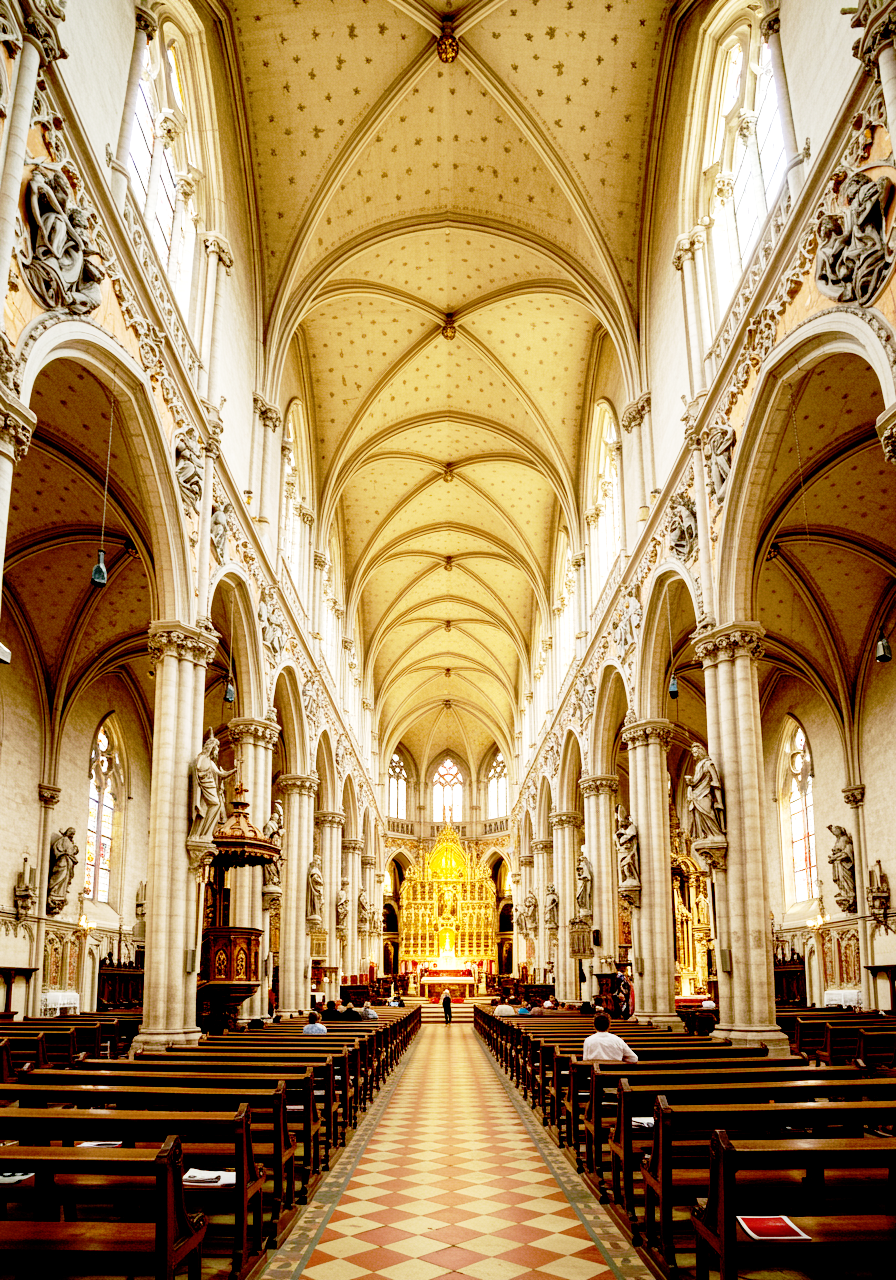
No trip to Vienna—whether for a day or a week—would feel complete without stepping inside St. Stephen’s Cathedral. Known locally as Stephansdom, this iconic church is right in the historic heart of the city and serves as a spiritual, cultural, and architectural landmark for locals and visitors alike.

Rising proudly with its soaring Gothic spire and richly patterned tiled roof, St. Stephen’s dominates Stephansplatz, a bustling square surrounded by shops, street musicians, and cafés. But beyond its striking exterior lies a world of ornate craftsmanship, sacred art, and centuries of Vienna’s spiritual story.

One Week Tip: Plan your visit in the late morning or just before sunset—Stephansplatz gets beautifully golden during those hours, and it’s also a great time for photos if you’re heading up the tower.

What to See Inside St. Stephen’s Cathedral

Architectural Harmony

Originally constructed in the 12th century, St. Stephen’s Cathedral has survived wars, fires, and rebuilds, including a major restoration after World War II. The building is a stunning mix of Romanesque roots and Gothic grandeur, blending bold stonework, detailed facades, and dramatic vertical lines that seem to reach the heavens.

The Pulpit

Make sure to pause at the stone pulpit, a Renaissance masterpiece carved by Anton Pilgram in the early 1500s. Its delicate details include carved faces peeking out along the edges and a self-portrait of the sculptor looking out from beneath the stairs. It’s one of the most remarkable examples of medieval stone carving in Austria.

The Virgin’s Choir

In the Baroque wing of the cathedral, you’ll find the elaborate Wiener Neustädter Altar, dating back to 1447. This winged altar is dedicated to the Virgin Mary and features beautifully preserved painted panels telling scenes from her life—truly a sacred work of art.

The South Tower (Steffl)

If you’re up for a bit of a workout, climb the 343 steps to the South Tower, lovingly nicknamed “Steffl” by locals. From the top, you’ll get one of the most panoramic views of Vienna’s cityscape. It’s narrow and steep—but the reward is unforgettable.

One Week Tip: If you’ve already visited the Gloriette at Schönbrunn or the Rathaus Tower, you might skip the climb here unless you’re after that postcard-worthy skyline shot.

The Catacombs

For something a little eerie and absolutely fascinating, take a guided tour of the catacombs beneath the cathedral. These underground chambers are home to the remains of Vienna’s bishops, as well as Habsburg royalty, whose internal organs were stored in urns separate from their bodies—an old royal custom.

Even more chilling are the stacks of bones left behind from plague victims, arranged like firewood—a humbling reminder of Vienna’s resilience through dark times.

One Week Tip: Tours of the catacombs are brief but impactful. They’re offered in both English and German, and tickets can be purchased at the southern entrance of the cathedral.

Whether you’re drawn to cathedrals for their quiet reverence, historic legacy, or architectural marvels, St. Stephen’s Cathedral is a Vienna essential. It’s a space where time seems to slow down—right in the middle of a bustling modern city—and offers a perfect pause during your week of exploration.

Day 6: A Step into Genius – Mozart House

Mozart-House

If Vienna is the capital of classical music, then Mozart is its beating heart. One of the city’s most celebrated former residents, Wolfgang Amadeus Mozart, spent some of the most creative and successful years of his life right here. Nestled just behind St. Stephen’s Cathedral, the Mozart House (Mozarthaus Vienna) is a must-visit for any music lover—or anyone curious about Vienna’s rich artistic legacy.

In 1781, at just 25 years old, Mozart left behind his post in Salzburg and moved to Vienna in search of greater freedom and artistic opportunity. It was here, in this elegant apartment on Domgasse 5, that he composed some of his greatest works, including The Marriage of Figaro.

What You’ll Discover at Mozart House

Inside this beautifully preserved four-story building, you’ll be taken on a fascinating journey through Mozart’s personal and professional life. It’s the only apartment he lived in that still exists today—and walking through it truly feels like stepping back into the 18th century.

Original Compositions and Personal Memorabilia

You’ll find displays of Mozart’s handwritten music sheets, letters, and portraits of him and his wife, Constanze. These artifacts give you a deeply personal glimpse into his world—not just as a composer, but as a man with ambitions, flaws, and a spark of brilliance that changed the course of music.

The Man Behind the Music

The museum doesn’t shy away from Mozart’s complexities. You’ll learn about his love for luxury, his struggles with gambling, and his tenuous finances, despite his incredible success. He was, in many ways, the first true freelance composer, working outside the rigid court structures and relying on public support, patronage, and performances to sustain his career.

Mozart and the Imperial Court

Mozart’s time in Vienna wasn’t just spent composing at home—he also held important roles within the Imperial Palace, writing for the nobility and performing for elite audiences. The exhibit explores this connection and highlights how his music bridged both popular and aristocratic circles.

Life in the 18th Century

Beyond the music, touring the Mozart House also offers a rare look at daily life for the affluent class in Vienna during Mozart’s time. The rooms are restored with historical furnishings and décor, giving you an idea of how upper-middle-class families lived in the late 1700s.

One Week Tip: Plan about 45–60 minutes for your visit to Mozart House. The audio guide is well worth using—it adds depth to each room without overwhelming you. If you’re combining this with a walk around Stephansplatz, it makes for a great late morning or early afternoon activity.

Visiting the Mozart House isn’t just a treat for classical music fans—it’s a window into the life of a true genius, set within the charm of old Vienna. Whether you’re humming Eine kleine Nachtmusik as you leave or just soaking in the history, this stop adds a meaningful and melodic layer to your Vienna week.

Day 7: Museum-Hopping in the Cultural Heart of Vienna – MuseumsQuartier

MuseumsQuartier

Ready to soak in Vienna’s artistic soul? Set aside a full day to explore the MuseumsQuartier—one of the world’s largest and most vibrant cultural complexes. Whether you’re into fine art, architecture, photography, or hands-on experiences for kids, there’s something here to captivate everyone.

Built within elegant 18th and 19th-century buildings, the MuseumsQuartier (often called MQ) is a feast for the eyes both inside and out. Quaint cafés, shaded courtyards, and modern sculptures fill the outdoor spaces, creating a delightful contrast between imperial elegance and cutting-edge creativity. It’s the kind of place where you could easily spend a few hours—or an entire day.

Museums You Shouldn’t Miss

Here’s a quick guide to help you pick which museums to visit based on your interests:

Leopold Museum

Home to the world’s largest collection of Egon Schiele paintings, this museum is a treasure trove for fans of Austrian modernism and Art Nouveau. Expect expressive portraits, bold brushwork, and a powerful insight into Vienna’s artistic golden age.

  • Hours: Mon, Wed, Fri–Sun: 10 a.m. – 6 p.m.; Thu: 10 a.m. – 9 p.m.; Closed Tue

  • Cost: €12

Mumok (Museum Moderner Kunst)

For lovers of modern and contemporary art, mumok is a visual adventure. This striking grey cube houses international pieces from movements like Pop Art, Fluxus, and Minimalism, plus plenty of surprises.

  • Hours: Mon: 2 p.m. – 7 p.m.; Wed, Fri–Sun: 10 a.m. – 7 p.m.; Closed Tue & Thu

  • Cost: €10

Kunsthalle Wien

More than just paintings—this innovative space focuses on multimedia exhibitions including video, photography, and digital art. Perfect if you’re looking for something bold, conceptual, or thought-provoking.

  • Hours: Daily except Thu: 10 a.m. – 7 p.m.; Thu: 10 a.m. – 9 p.m.

  • Cost: €12

Architekturzentrum Wien

Architecture buffs will enjoy this museum’s rotating exhibits on urban design and contemporary architecture. It’s a lesser-known gem, but fascinating if you’re into how cities are built and imagined.

  • Hours: Daily: 10 a.m. – 7 p.m.

  • Cost: €7

Naturhistorisches Museum (Natural History Museum)

Expect dinosaur skeletons, glittering gemstones, and 30+ million artifacts spanning everything from prehistoric creatures to the largest meteorite collection on Earth. A must-see for science fans and families alike.

  • Hours: Wed: 9 a.m. – 9 p.m.; Thu–Mon: 9 a.m. – 6:30 p.m.; Closed Tue

  • Cost: Adults €10; Students under 27 €5; Kids under 19 free

ZOOM Kindermuseum

Traveling with little ones? This interactive kids museum is perfect for curious young minds. There are creative workshops, touch-and-learn exhibits, and themed play zones tailored to children.

  • Hours: Tue–Fri: 8:30 a.m. – 4 p.m.; Sat–Sun: 10 a.m. – 4 p.m.; Closed Mon

  • Cost: General entry is free; special activities may have a small fee

Kunsthistorisches Museum

One of Europe’s premier fine art museums, the Kunsthistorisches Museum boasts the personal collections of the Habsburgs. Expect masterpieces by Raphael, Rembrandt, Vermeer, and Rubens, alongside jaw-dropping ancient Egyptian and Roman artifacts.

  • Hours: Mon–Wed, Fri–Sun: 10 a.m. – 6 p.m.; Thu: 10 a.m. – 9 p.m.

  • Cost: Adults €14; Kids under 19 free

More Than Just Museums

The MuseumsQuartier is also home to performance spaces like Halle E+G, where you might catch a cutting-edge dance performance or experimental theatre show. If you’re lucky, your visit could coincide with an outdoor film night, art festival, or pop-up event in the main courtyard.

One Week Tip:

Start your day with coffee and cake at Café Leopold or Café Halle, then map out your top 2–3 museums. The area is walkable, but you’ll want to pace yourself. Many of the museums offer combo tickets or discounts with the Vienna Pass.

MuseumsQuartier is the perfect finale to a week in Vienna—bridging past, present, and future through art, culture, and creativity. Whether you’re gazing at centuries-old portraits or reflecting on contemporary installations, it’s a powerful reminder of how much this city continues to inspire.

Day 8: Vienna State Opera & the City’s Musical Magic

state-opera-house-vienna

No trip to Vienna is complete without embracing its deep musical roots. Today, immerse yourself in the world of classical masterpieces, starting with one of the city’s most iconic cultural landmarks—the Vienna State Opera.

Even if you’re not attending a performance, this building is worth a visit for its jaw-dropping architecture and rich history. Located along the grand Ringstrasse boulevard, the Vienna State Opera (or Wiener Staatsoper in German) is a stunning symbol of the city’s commitment to art, beauty, and world-class sound.

A Stage of Legends

The opera house first opened its doors in 1869 with a performance of Mozart’s Don Giovanni and has since become a global beacon for opera lovers. Designed by architect August Sicard von Sicardsburg, it was constructed with acoustics in mind—every note designed to reach you in perfect clarity.

Sadly, like many parts of Vienna, the building was heavily damaged during World War II. A bombing in 1945 destroyed much of the opera house, including the stage and auditorium. But by 1955, the Vienna State Opera had risen from the rubble, stronger and more symbolic than ever. Its reopening marked a new era of hope and culture in post-war Austria.

Inside the Opera House: What to Look For

Take a guided tour of the opera house to explore its grand spaces and uncover stories of the past. Here are some highlights you won’t want to miss:

  • Frescoes on the Veranda: These enchanting scenes from The Magic Flute (Zauberflöte) were painted by Moritz von Schwind and line the entrance veranda, offering a taste of what’s to come inside.

  • The Grand Staircase: One of the most photographed parts of the building—and thankfully one of the few original elements that survived the war—it’s elegant, romantic, and perfect for a quick photo.

  • The Schwind Foyer: Named after the same artist as the frescoes, this stunning foyer with its painted ceiling and golden glow is like stepping into a painting.

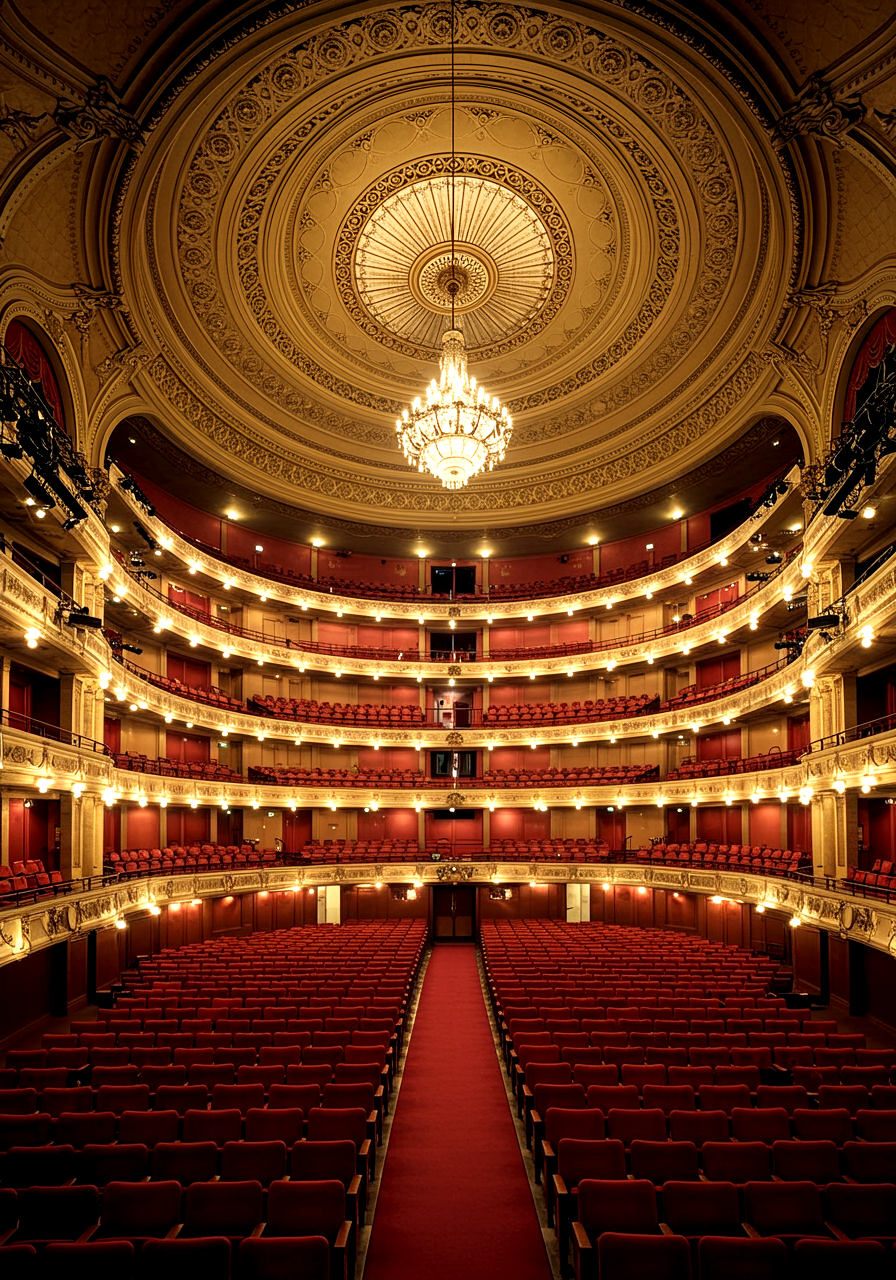
  • The Performance Hall: Known for its exceptional acoustics and grand chandeliers, this is the beating heart of the Vienna State Opera. Whether you’re sitting in the stalls or way up in the gallery, the sound wraps around you like velvet.

Attend a Performance (If You Can!)

If your schedule allows, attending a performance here is unforgettable. The Vienna State Opera offers over 350 performances a year—including opera, ballet, and concerts. You don’t need to be an opera buff to enjoy it, and ticket prices can range from surprisingly affordable standing-room spots to luxurious balcony seats.

Weeklong Tip: Book in advance—some shows sell out quickly. If you’re budget-conscious, look into standing room tickets (Stehplätze), which are often under €10.

Opera House Museum

Don’t miss the State Opera Museum, located nearby. Open Tuesday to Sunday, it delves into the history of the opera house, featuring costumes, musical scores, and personal stories from some of the world’s greatest performers who have taken the stage here.

One Week in Vienna Tip:

Whether you tour it by day or enjoy a live performance in the evening, the Vienna State Opera offers a powerful glimpse into Vienna’s soul. Even just strolling by and admiring the building’s exterior—lined with stars bearing the names of great composers—is an experience all its own.

If you’re planning a musical evening out, pair your visit with dinner at Café Sacher next door or drinks at Hotel Bristol’s elegant bar, both just steps from the opera house.

Final Thoughts: One Magical Week in Vienna

Spending a full week in Vienna gives you the perfect opportunity to dive deeper into the city’s imperial elegance, rich musical heritage, and café-filled charm at your own pace. From palaces that whisper stories of the Habsburgs to cozy coffeehouses where time seems to pause, Vienna is a city that invites you to linger, listen, and look closer.

Over the past seven days, you’ve strolled through baroque courtyards, heard horses dance to classical music, admired world-famous artwork, and maybe even tasted a bit too much Sachertorte (if that’s even possible). Whether you came for the history, the art, the music, or simply the atmosphere, Vienna leaves an impression that’s hard to forget.

This guide was designed to help you plan, explore, and enjoy—without rushing through the magic. I hope it made your time smoother, more enriching, and full of beautiful memories.

Until next time—Auf Wiedersehen from Vienna!

Leave a Comment

Your email address will not be published. Required fields are marked *

Scroll to Top